
THE GARDENING NETWORK

Give a Wheelbarrow a Second Life

Container Calculator

Wheelbarrow Gardens: Turn Old & New Wheelbarrows Into Unique Mobile Raised Gardens

A wheelbarrow can be much more than a garden tool. With drainage, good soil, and a little imagination, an old steel barrow, a new utility wheelbarrow, or even a weathered wooden model can become a one-of-a-kind raised garden that can be positioned almost anywhere.

Wheelbarrow gardens combine several useful ideas in one small space: raised-bed gardening, container growing, recycling, garden art, and mobility. They can hold vegetables near the kitchen, herbs beside a patio, a pollinator display by an entrance, or a changing arrangement of annual flowers that can be rolled into a more prominent position when it reaches peak bloom.
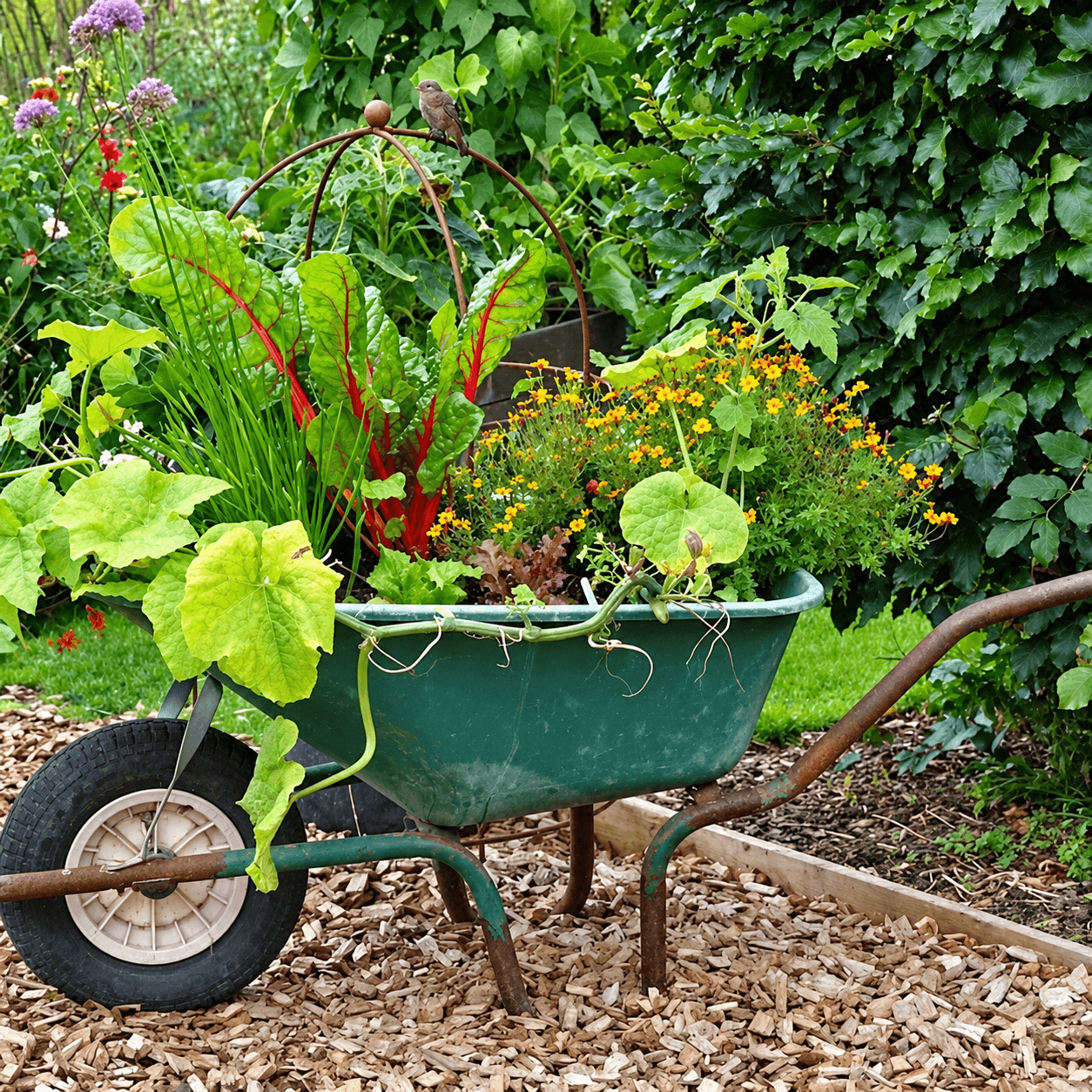
The best wheelbarrow garden is not simply a container with a wheel. Treat the wheelbarrow itself as part of the garden design—its age, paint, handles, wheel, plants, and location can all contribute to the finished look.

Why Wheelbarrows Make Such Interesting Raised Gardens

  • The growing area is naturally raised above ground level.
  • The shape creates an instant focal point in a garden or patio.
  • Old equipment can be reused instead of discarded.
  • A functional wheel can make the garden at least partly mobile.
  • Metal, wood, paint, flowers, foliage, and trailing plants can be combined artistically.
  • The limited soil volume encourages intentional plant selection instead of overplanting.
  • A wheelbarrow can be changed seasonally without rebuilding a permanent raised bed.

Eight Wheelbarrow Garden Styles to Try

1. Rustic Farm Garden

Keep an old galvanized or weathered steel wheelbarrow largely as it is. Pair the aged metal with herbs, marigolds, nasturtiums, lettuce, or compact vegetables for a working-garden look.

2. Painted Garden Art

Sand and prepare the exterior, then use color, stencils, hand-painted flowers, geometric patterns, farm motifs, or a garden name to turn the wheelbarrow into a focal point.

3. Kitchen Herb Barrow

Plant basil, parsley, thyme, chives, cilantro, oregano, and other frequently harvested herbs, then park the wheelbarrow near the kitchen or outdoor cooking area.

4. Pollinator Wheelbarrow

Use compact flowering plants suited to your region to create a concentrated splash of nectar and pollen close to vegetable beds, patios, or entry gardens.

5. Edible Salad Garden

Leaf lettuce, arugula, radishes, chard, dwarf kale, green onions, and herbs can create a compact harvest garden where the entire surface is productive.

6. Trailing Flower Display

Plant taller flowers or foliage toward the center and trailing plants near the rim so they spill over the sides and soften the hard outline of the barrow.

7. Succulent & Dry Garden

Where climate permits, a shallow, free-draining mix can support succulents and drought-tolerant ornamentals while emphasizing stones, gravel, texture, and sculptural plant forms.

8. Seasonal Showcase

Change the planting through the year—spring flowers, summer herbs, fall color, ornamental grasses, or cool-season greens—without altering the permanent garden.

Transform Any Wheelbarrow Into A Mobile Garden

turning a wheelbarrow into a raised garden

Old Wheelbarrow or New Wheelbarrow?

Both can work, but they create very different gardens. An old wheelbarrow already has character. Dents, worn handles, faded paint, and surface rust can make it look as though it has always belonged in the garden. A new wheelbarrow offers cleaner metal or plastic, predictable strength, and easier movement, making it a better choice when the planter will be relocated frequently.

Choose an Old Wheelbarrow When...

  • You want an aged, rustic, cottage, farmhouse, or reclaimed look.
  • The tray and support frame are still structurally sound.
  • The barrow will mostly remain in one location.
  • You enjoy restoration, painting, or repurposing old garden equipment.

Choose a New Wheelbarrow When...

  • Mobility is a major part of the design.
  • You want to choose the tray material, size, wheel type, and handle style from the start.
  • You want a clean surface for custom artwork or a coordinated garden color scheme.
  • You expect to grow heavier crops or use a deeper soil profile.

Step 1: Inspect the Wheelbarrow Before Planting

Before adding soil, check the tray, frame, legs, axle, tire, handles, bolts, and edges. Soil becomes much heavier when wet, so a wheelbarrow that feels solid while empty may behave differently after it becomes a planted container.

  • Tighten loose bolts and fasteners.
  • Repair or replace badly split wooden handles.
  • Remove or smooth sharp metal edges.
  • Check that the legs sit evenly on the ground.
  • Inflate or repair the tire if the barrow will remain mobile.
  • Remove loose, flaking rust or paint before finishing the exterior.
For edible gardens: be cautious with very old painted wheelbarrows or equipment that may previously have carried chemicals, fuels, treated materials, pesticides, or other unknown substances. If its history is uncertain, use it for ornamental plants or have questionable coatings/materials properly evaluated before growing food in direct contact with them.

Step 2: Give the Wheelbarrow Real Drainage

A wheelbarrow is designed to hold material, which means an unmodified tray can also hold rain and irrigation water. Plants need excess water to escape. Several drainage openings distributed across the lowest areas of the tray are generally better than relying on a single hole.

Covering drainage openings with a small piece of screen or permeable landscape fabric can help keep potting mix from washing out while still allowing water to move through. Avoid creating a sealed plastic liner that prevents drainage.

Step 3: Keep the Drainage Layer Simple

The most important drainage feature is an open path for water to leave the wheelbarrow. Filling a large part of the tray with heavy rocks can reduce valuable root space and add considerable weight. A well-draining growing mix over unobstructed drainage holes is usually more useful than turning the bottom of the barrow into a thick rock layer.

Step 4: Fill It With a Container-Appropriate Growing Mix

Wheelbarrow gardens behave more like large containers than in-ground beds. A loose, moisture-retentive but free-draining container mix is generally easier to manage than dense yard soil, which can compact and become extremely heavy.

Leave some space below the rim so water does not immediately carry soil over the side. The amount of soil you need will depend on the shape of the tray; our Container Size Calculator can help estimate growing volume when planning larger container projects.

Step 5: Match Plants to the Depth of the Wheelbarrow

Wheelbarrows are wide but often relatively shallow. That makes them especially well suited to plants that do not need a very deep root zone. Deeper contractor-style barrows provide more options than shallow decorative models.

Good Edible Choices

  • Leaf lettuce and salad greens
  • Radishes
  • Green onions
  • Parsley, basil, thyme, oregano, chives, and cilantro
  • Strawberries
  • Dwarf kale and Swiss chard
  • Compact peppers where the tray provides enough root volume
  • Bush beans in larger wheelbarrows

Good Ornamental Choices

  • Marigolds
  • Nasturtiums
  • Petunias and other trailing annuals
  • Compact pollinator flowers suited to your region
  • Succulents in appropriate climates and fast-draining mixes
  • Ornamental grasses and foliage accents

Use the Shape of the Wheelbarrow as Part of the Planting Design

Instead of planting in rows as though the wheelbarrow were a tiny farm field, design it in layers. A taller focal plant can occupy the center or rear of the tray, medium-height plants can fill the middle, and trailing plants can spill over the sides and front.

Simple design formula: combine one upright focal plant, several medium-height fillers, and one or more trailing plants. The same approach works with flowers, herbs, edible plants, or mixed displays.

Painting and Decorating a Wheelbarrow Garden

A wheelbarrow planter can become garden art before the first plant goes in. The exterior can be restored to look nearly new or intentionally left weathered. Bright paint works well in children's gardens and contemporary spaces, while muted finishes, hand lettering, or lightly restored metal suit cottage and farmhouse gardens.

  • Paint the outside a single bold color.
  • Add the family name, garden name, or house number.
  • Stencil bees, leaves, vegetables, flowers, or geometric patterns.
  • Paint the wheel and handles in contrasting colors.
  • Leave part of the original finish visible to preserve history.
  • Use reclaimed wooden handles as part of the decorative character.

Prepare surfaces properly and choose coatings intended for the material and outdoor exposure. Keep decorative coatings where they belong and follow the product directions, particularly when the container will hold edible plants.

Mobility: The Feature That Makes These Gardens Different

A functioning wheel lets you do something a conventional raised bed cannot: change the garden's location. A planted wheelbarrow can be repositioned for entertaining, moved to make room on a patio, shifted to a protected location during severe weather, or rolled into better seasonal light when practical.

The limitation is weight. Moist growing mix is heavy, and a fully planted barrow may be much harder to move than expected. If regular mobility matters, select a smaller wheelbarrow, use a durable pneumatic or solid wheel, maintain the axle, avoid unnecessarily heavy fill materials, and move the garden before watering rather than afterward.

Keep the Wheelbarrow Stable Once Parked

  • Choose a reasonably level, firm surface.
  • Make sure both rear legs are solid and evenly supported.
  • Keep the heaviest plants near the center rather than hanging far over one side.
  • Chock the wheel if the location slopes or the barrow can roll.
  • Do not place it where children or pets are likely to climb on the handles.
  • Avoid exposed locations where strong wind can catch tall plants or trellises.

Watering a Wheelbarrow Garden

Like most container gardens, a wheelbarrow can dry faster than an in-ground bed. The metal sides of some wheelbarrows can also become warm in strong sun. Check moisture with the plants and local weather in mind rather than watering on a rigid schedule.

Mulch can slow evaporation, and grouping plants with similar moisture needs makes maintenance easier. If the garden will remain in one location for most of the season, a small drip line can reduce hand watering—but disconnect it before moving the wheelbarrow.

Create Several Wheelbarrow Gardens Instead of One

A group of wheelbarrows can become a flexible mini garden. One can hold herbs, another flowers, another salad greens, and another seasonal plants. Different colors or wheelbarrow styles can create a deliberately collected look, while matching new wheelbarrows can form a more contemporary mobile garden system.

Where Wheelbarrow Gardens Work Best

  • Patios and decks that can safely support the loaded weight
  • Courtyards
  • Kitchen-garden entrances
  • Along wide garden paths
  • Near sheds, barns, and potting areas
  • Community gardens
  • School gardens
  • Restaurant or café herb gardens
  • Front-yard seasonal displays
  • Temporary garden events and demonstrations

Make It a Garden Project With Children

A wheelbarrow garden is small enough to feel manageable and unusual enough to hold a child's attention. Children can help choose colors, paint simple designs, select plants, sow seeds, and watch the entire garden fill in over the season. Our Kid-Friendly Plants guide can help with easy plant choices.

Make It Easier to Reach

Because the tray is raised, a wheelbarrow can also be easier to work with than a ground-level garden. Positioning it beside stable seating or an accessible path can bring herbs, flowers, and shallow-rooted vegetables closer to the gardener. For additional ideas, see our Gardening for Seniors guide.

Wheelbarrow Gardens FAQ

Can you use an old wheelbarrow as a garden planter?

Yes. If the wheelbarrow is structurally sound and drains properly, it can become an excellent raised container. For edible crops, be cautious with unknown residues and questionable old coatings.

Do wheelbarrow gardens need drainage holes?

Yes. Free drainage is essential. Several openings across the low points of the tray are preferable to allowing irrigation or rainwater to collect around roots.

What can you grow in a wheelbarrow garden?

Herbs,lettuce, greens, strawberries, radishes, compact peppers, bush beans, flowers, trailing annuals, and succulents can all work when matched to the wheelbarrow's soil depth, sunlight, climate, and watering conditions.

How do you keep a wheelbarrow planter from tipping?

Park it on firm level ground, maintain the support legs, distribute weight evenly, keep tall plants from becoming top-heavy, and chock the wheel when additional stability is needed.

Can a planted wheelbarrow still be moved?

Usually, but wet soil can make it surprisingly heavy. If mobility is important, keep the wheel and handles in good condition and move the planter before watering whenever practical.

Turn Everyday Garden Objects Into Growing Space

Explore more ideas for containers, accessible gardens, and creative ways to grow food and flowers in compact spaces.