
Gardening does not need to become more difficult simply because bending, lifting, balance, heat, or long periods of standing become less comfortable. A well-designed garden can adapt to the gardener.
Raised beds, containers, lightweight tools, drip irrigation, stable seating, and shorter maintenance routines can make growing vegetables, herbs, and flowers more enjoyable while reducing unnecessary physical strain.
The goal is not to do less gardening. It is to design the garden so the work that matters most becomes easier.
Gardening combines movement, observation, routine, problem-solving, fresh air, and a continuing connection to seasonal change. It can also provide a meaningful reason to step outside each morning and check what has changed overnight.
Gardening also works naturally across generations. Our Gardening for Everyone guide explores how seniors, children, families, and beginners can grow together.
Raised beds and elevated planters reduce repeated bending. Waist-high containers can bring planting, pruning, and harvesting into a much more comfortable working zone.
A productive garden does not have to be at the far end of the yard. Herbs, greens, strawberries, and compact vegetables close to the kitchen are easier to check and harvest.
Drip irrigation, lightweight hoses, timers, and nearby water connections can eliminate repeated lifting and carrying of heavy watering cans.
Clear, reasonably level paths reduce trip hazards. Keep hoses, tools, pots, and garden supplies out of primary walking areas.
Compact, bush, and determinate varieties can provide substantial production without requiring ladders, oversized trellises, or constant pruning.
Ergonomic handles, long-handled tools, lightweight pruners, and easy-grip equipment can reduce strain on hands, wrists, shoulders, and the lower back.
A stable chair, bench, or garden kneeler-seat makes it easier to divide garden work into shorter sessions and provides a convenient place for breaks.
A few highly productive containers or raised beds can be more rewarding than a large garden that creates more work than enjoyment.
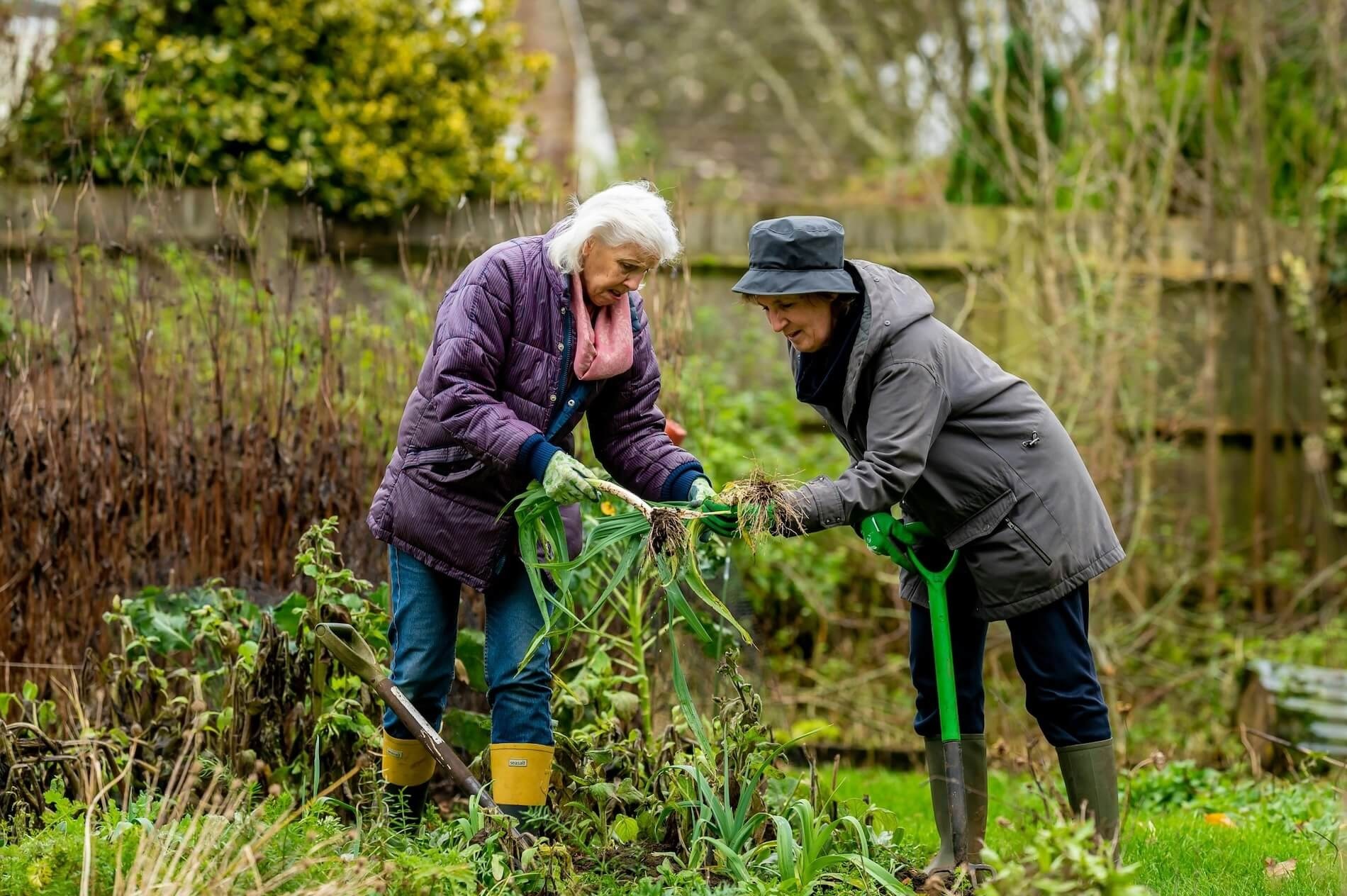
Raised beds can reduce bending while keeping soil, irrigation, and plants within a defined space. The ideal height depends on whether the gardener prefers to stand, sit, or work from a wheelchair or garden stool.
Beds should be narrow enough that the center can be reached without leaning too far. If a bed can only be accessed from one side, keeping it relatively narrow becomes even more important.
Community gardens can also be designed around accessible beds. Growing to Give provides examples of community and raised-bed gardens.
Containers are particularly useful because they can be moved or positioned before planting at a comfortable height. They are also easy to locate near a patio, door, deck, or outdoor seating area.
The main tradeoff is that containers have less growing medium than an in-ground bed and may dry more quickly. Larger containers generally provide a more stable root environment than very small pots.
The Container Size Calculator can help with planning container volume for different crops.
The most productive plant is not necessarily the largest plant. Smaller varieties can be easier to support, prune, inspect, and harvest.
Lettuce, kale, and chard can provide repeated harvests without heavy fruit or complicated support structures.
Bush beans avoid the need for a tall trellis and can produce heavily in a relatively compact space. Our external guide to growing beans provides additional growing information.
Determinate tomatoes and compact pepper varieties are generally easier to manage in containers than very large indeterminate plants that continue growing throughout the season.
Basil, parsley, chives, thyme, and other frequently used herbs can be kept close to the kitchen for convenient harvesting.
Water is heavy. A full watering can can quickly turn a relaxing garden routine into repetitive lifting.
Drip irrigation or a lightweight hose placed close to the garden can make watering easier. Timers can improve consistency, although plants should still be checked because weather and plant size change water requirements.
Tool design matters. Long handles can reduce bending, larger grips can make tools easier to hold, and lightweight materials reduce fatigue.
In hot climates, the garden may be most comfortable early in the morning. In cooler regions or seasons, mid-morning or afternoon may be preferable.
There is no reason to finish every garden task in one session. Ten or fifteen minutes of checking plants, harvesting, or pruning can be enough for one visit.
A garden should also be a place to enjoy. Seating near herbs, flowers, vegetables, or pollinator plants turns the garden into a living outdoor room rather than a list of chores.
A chair in the shade can become a place to inspect plants, shell beans, trim herbs, talk with family, or simply watch what visits the garden.
Gardening offers an easy way to share knowledge across generations. Children can handle some of the tasks that involve bending, carrying, or reaching while seniors provide experience, planning, and patience.
If children are joining the garden, our Kid-Friendly Plants guide includes easy crops and flowers that provide quick, visible progress.
Raised beds, elevated planters, and containers are often easiest because plants can be positioned at a comfortable height and close to the house.
Lettuce, chard, kale, bush beans, herbs, strawberries, compact peppers, and determinate tomatoes can all be practical choices when matched to the local season and available light.
Use raised beds, elevated containers, long-handled tools, garden seats, and vertical growing structures that keep plants within easy reach.
Yes. Containers are flexible and can be positioned close to doors or seating areas. Choose containers large enough for the crop and remember that pots generally require more frequent moisture checks than garden soil.
Keep paths open, secure hoses, use stable seating, minimize lifting, provide good lighting, keep tools organized, and avoid working during uncomfortable heat or other difficult conditions.
Explore practical guides and tools that can help simplify plant selection, container planning, and everyday garden care.