A garden can be as simple as a few containers beside a doorway or as ambitious as a shared community plot producing food for dozens of families. For veterans, gardening can offer a practical activity built around planning, observation, problem-solving, steady progress, and a visible result at harvest time.
There is no single veteran garden. Some people want fresh tomatoes and herbs at home. Others prefer a raised bed that is easier to reach, a neighborhood garden shared with friends, or a larger project where part of the harvest is given back to the community.
The best garden is one that fits the gardener, the available space, the local growing season, and the amount of time someone genuinely wants to spend maintaining it.
Gardening is structured without being rigid. Plants have clear needs, seasons create natural milestones, and everyday tasks can be divided into small, practical jobs. A gardener can work independently or make the garden a shared project with family, friends, neighbors, or other veterans.
Gardening can also bring different generations and experience levels together. Our Gardening for Everyone guide explores ways families, seniors, children, and beginners can grow side by side.
Decide what success looks like before buying plants. A salad garden, salsa garden, herb garden, food-donation garden, or one productive tomato bed is easier to plan than an undefined collection of crops.
One raised bed, several large containers, or a compact in-ground plot is enough to learn what grows well locally without creating more watering and maintenance than expected.
A nearby hose, drip line, or simple irrigation system reduces one of the most repetitive garden chores and makes it easier to maintain plants during hot or dry weather.
Choose vegetables and herbs that match how you cook and eat. Productive plants are much more rewarding when the harvest has an immediate purpose.
Raised beds, containers, stable paths, seating, vertical supports, and tools stored within easy reach can make gardening more comfortable for anyone who prefers to reduce bending, lifting, kneeling, or long periods of standing.
Mulch can reduce weeds and slow moisture loss, while drip irrigation directs water to the growing area instead of unused ground.
A shared garden allows planting, watering, maintenance, and harvest duties to be divided. It can also turn a garden into a regular meeting place rather than a solitary project.
When production exceeds household needs, decide in advance whether surplus vegetables will go to neighbors, family, a community meal, or a local organization that accepts fresh produce.
Large gardens can look impressive, but they also multiply the need for soil preparation, watering, weeding, staking, harvesting, and cleanup. A smaller garden that stays healthy and productive usually provides a better first experience.
Beginners can start with three to six crops and expand after learning how much sun the site receives, how quickly the soil dries, which pests are common locally, and how much produce the household actually uses. Our Beginner Gardening guide covers the fundamentals in more detail.
Raised beds are useful when native soil is poor, drainage needs improvement, or the gardener wants a more defined growing area. Taller beds can also reduce repeated bending and make the edge of the garden easier to reach.
Containers are one of the easiest ways to put a garden close to a home, apartment, patio, deck, or accessible walkway. They can also be moved or rearranged as seasons and needs change.
If you are unsure how much growing space a crop needs, the Container Size Calculator can help with planning.
The best crops depend on climate, season, sunlight, and personal preference, but productive plants that provide repeated or useful harvests are often a good place to begin.
Leaf lettuce, kale, and chard can provide repeated harvests when grown during temperatures suited to the crop.
Bush varieties remain compact, generally need less support than pole beans, and can produce heavily in a relatively small footprint.
Peppers can be highly productive in warm conditions and work well in both beds and adequately sized containers.
Determinate and container-bred tomato varieties are easier to fit into smaller gardens than large indeterminate vines.
Basil, parsley, chives, thyme, and other culinary herbs can provide useful harvests from small spaces close to the kitchen.
Radishes and some leafy greens provide relatively quick results and can help keep a new garden interesting while slower crops mature.
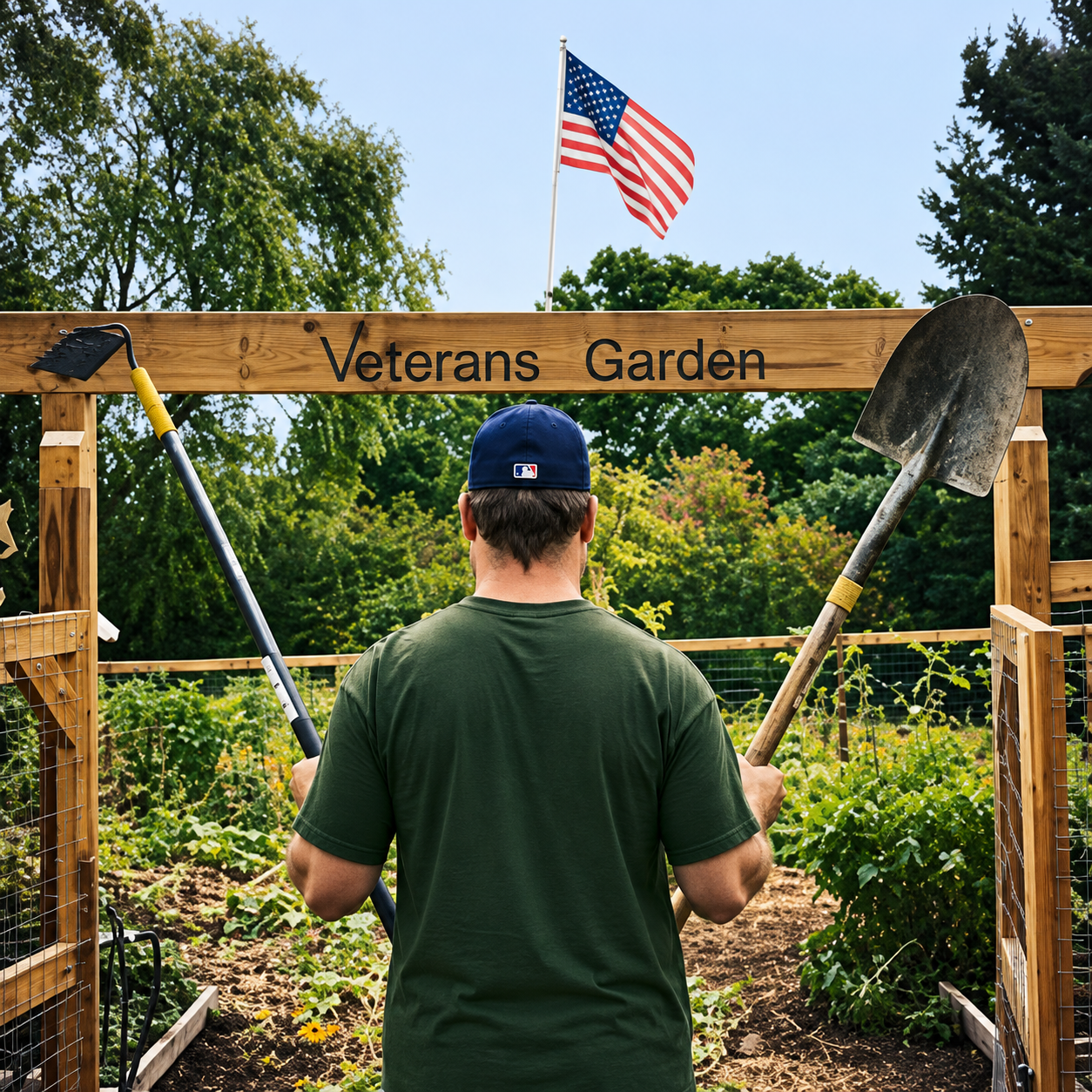
A veteran garden can be organized through an existing community garden, a neighborhood group, a veterans organization, a nonprofit, a faith community, or simply a small group of people willing to maintain a shared space.
The physical garden is only part of the project. Shared expectations about who waters, who has access to tools, how produce is divided, and what happens when someone is away are what keep the garden operating through an entire season.
A productive garden can serve more than the people who maintain it. Extra vegetables can be shared informally with neighbors and family, or a portion of the garden can be planted specifically for community distribution.
Before delivering produce to a food pantry, community kitchen, veterans organization, or other program, contact the organization first. Fresh-produce acceptance policies, preferred crops, packaging, delivery times, and local food-handling requirements can vary.
A garden can become a shared family project instead of one person's responsibility. Children can sow larger seeds, water containers, look for ripe vegetables, label plants, and help with harvesting while adults handle tasks requiring tools or heavier lifting.
Our Kid-Friendly Plants guide includes crops and flowers that are especially useful when younger gardeners are involved.
The Garden Tool Hub provides additional tools and calculators for planning and managing a garden.
A garden should still be manageable in the hottest weeks of summer, during travel, and when the first excitement of planting season has passed. Good planning reduces the amount of emergency work later.
Start with a manageable growing area close to water. A few containers, one raised bed, or a small plot with several dependable crops makes it easier to learn the site before expanding.
Lettuce, kale, chard, bush beans, herbs, peppers, radishes, and compact or determinate tomatoes are all practical possibilities when matched to the local climate and season.
Yes. Raised beds, elevated planters, containers, vertical supports, wide paths, stable seating, long-handled tools, and drip irrigation can reduce bending, kneeling, carrying, and difficult reaching.
A group can share a community plot, create beds through a local organization, or simply coordinate several home gardens. Dividing watering, maintenance, and harvesting responsibilities makes a larger project easier to sustain.
Yes. Surplus produce can be shared with neighbors or donated through organizations that accept fresh food. Confirm what a recipient can accept and any local handling requirements before planning a large donation crop.
Explore more practical guides and planning tools for starting, adapting, and expanding a productive garden.