Starting a garden can feel more complicated than it really is. New gardeners are often confronted with soil terminology, planting calendars, fertilizers, pruning advice, pest control, irrigation systems, and hundreds of plant choices before the first seed ever reaches the ground.
The most successful first garden is usually much simpler: choose the right place, grow a few suitable plants, water them consistently, observe what happens, and adjust as you learn.
Start with plants you actually want to eat or enjoy. A short list of vegetables, herbs, or flowers is easier to manage than a garden full of unfamiliar crops.
Watch your growing area through the day. Many fruiting vegetables need strong direct sun, while leafy greens and some herbs can tolerate less.
Use an in-ground bed, raised bed, or containers. The best choice is the one you can reach easily, water consistently, and observe every day.
Healthy roots need moisture, oxygen, nutrients, and physical room. Garden soil and container media behave differently, so use a growing medium suited to the system.
Leaf lettuce, radishes, bush beans, peas, kale, chard, herbs, and compact varieties of tomatoes and peppers can be good beginner choices when grown in the right season.
Crowding can reduce airflow, light penetration, root room, and yield. Read the mature size of the variety rather than judging spacing by the size of the seedling.
Water where roots are growing rather than just wetting the surface. Check the soil before watering and adjust for heat, wind, plant size, and container conditions.
Plants need nutrients, but more fertilizer is not always better. Begin with a sensible soil or fertilizer program and watch plant response before adding more.
A two-minute daily look can reveal wilt, pests, yellowing leaves, flowers, new fruit, or irrigation problems before they become major issues.
Harvest regularly, take notes, and remember what worked. Every season gives you information that makes the next garden easier.
You do not need a large backyard to become a gardener. A sunny balcony, patio, deck rail, courtyard, raised bed, or small corner of a yard can produce meaningful harvests.
Containers are flexible and easy to place close to the house. They are excellent for herbs, greens, compact vegetables, bush beans, strawberries, and varieties bred specifically for small spaces.
Raised beds provide a clearly defined growing area and can make soil management and access easier. They are also useful where native soil is poor, compacted, or difficult to work.
In-ground gardens provide a large rooting environment and can buffer moisture and temperature changes better than small containers. Soil quality, drainage, and local conditions still matter.
Sunlight is one of the first things a gardener should evaluate because it cannot be fixed with fertilizer. A plant that needs strong sun may survive in shade but never reach its productive potential.
Soil is not simply something that holds a plant upright. It is the environment in which roots obtain water, oxygen, nutrients, and biological support.
Natural garden soil contains mineral particles, organic matter, microorganisms, and pore spaces. Commercial container mixes are often formulated from materials such as peat, coir, bark, compost, and perlite. Each behaves differently, particularly in how it stores water, drains, heats, and holds nutrients.
Beginner plants should give you useful feedback and a reasonable chance of success. The right choices depend on season and climate, but these crops are good starting points in many gardens.
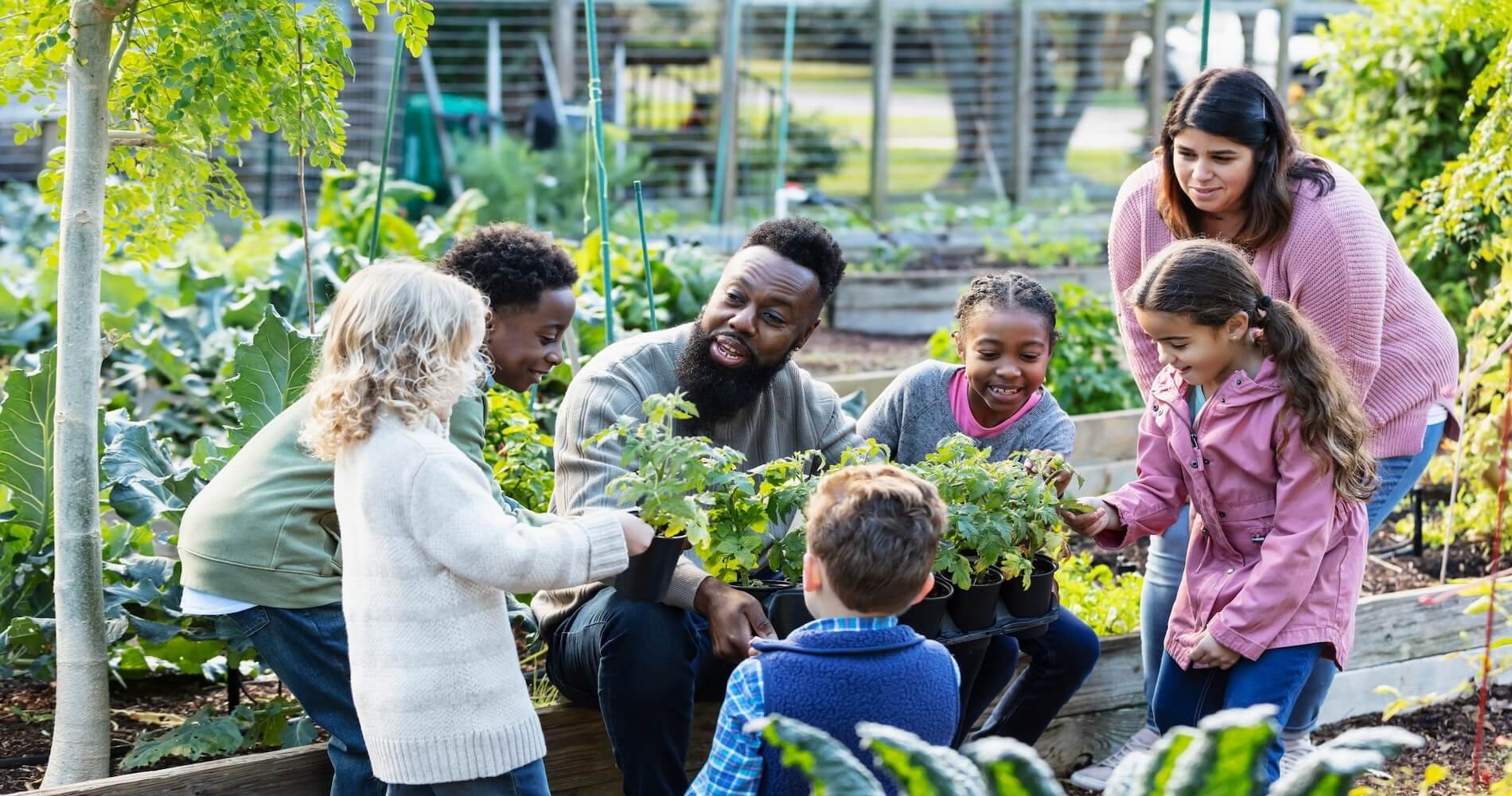
Gardening with children? Our Kid-Friendly Plants guide focuses on easy crops, flowers, and herbs that provide plenty of visible progress and hands-on learning.
Both can work. Some plants are easy to sow directly from seed, while others are simpler for a beginner to start as young transplants.
There is no universal rule such as “water every day” that works in every garden. A large plant in a container during hot weather can use water very differently from a young plant growing in deep garden soil.
Check the root zone. If the soil is still appropriately moist, adding more water may not help. If it is drying too deeply, the plant may already be under stress.
Beginners sometimes assume that a struggling plant simply needs more fertilizer. In reality, problems can be caused by excessive water, insufficient water, poor drainage, heat, cold, root restriction, incorrect soil pH, pests, disease, or inadequate sunlight.
Start with a balanced approach. Understand what is already in your soil or growing mix, follow product directions where fertilizers are used, and observe the plant before making major changes.
You do not need a complicated journal. Write down the planting date, variety, location, basic watering method, first flowers, first harvest, and anything unusual. A few notes can become extremely valuable the following season.
If you are growing in containers, our Container Size Calculator can help you think through pot size, while the Compost Calculator can help with planning organic materials.
Start with one small bed or several containers, choose a few easy plants appropriate for your climate and season, and place them somewhere you will see them regularly.
Lettuce, radishes, bush beans, peas, chard, kale, herbs, and compact tomato or pepper varieties are often good choices when matched to suitable weather and sunlight.
Many fruiting crops prefer six or more hours of direct sunlight. Leafy vegetables can often produce with less. In very hot climates, strong morning sun with some afternoon protection may be useful for certain crops.
Check soil moisture rather than relying only on the calendar. Weather, wind, plant size, soil type, container size, and root depth all influence watering needs.
It can be. Containers are convenient and easy to manage, but they also have a smaller soil volume and can dry or heat more quickly. Choose an appropriate container size and growing medium for the plant.
Build on the basics with practical gardening tools, family-friendly plant ideas, and simple growing guides.